
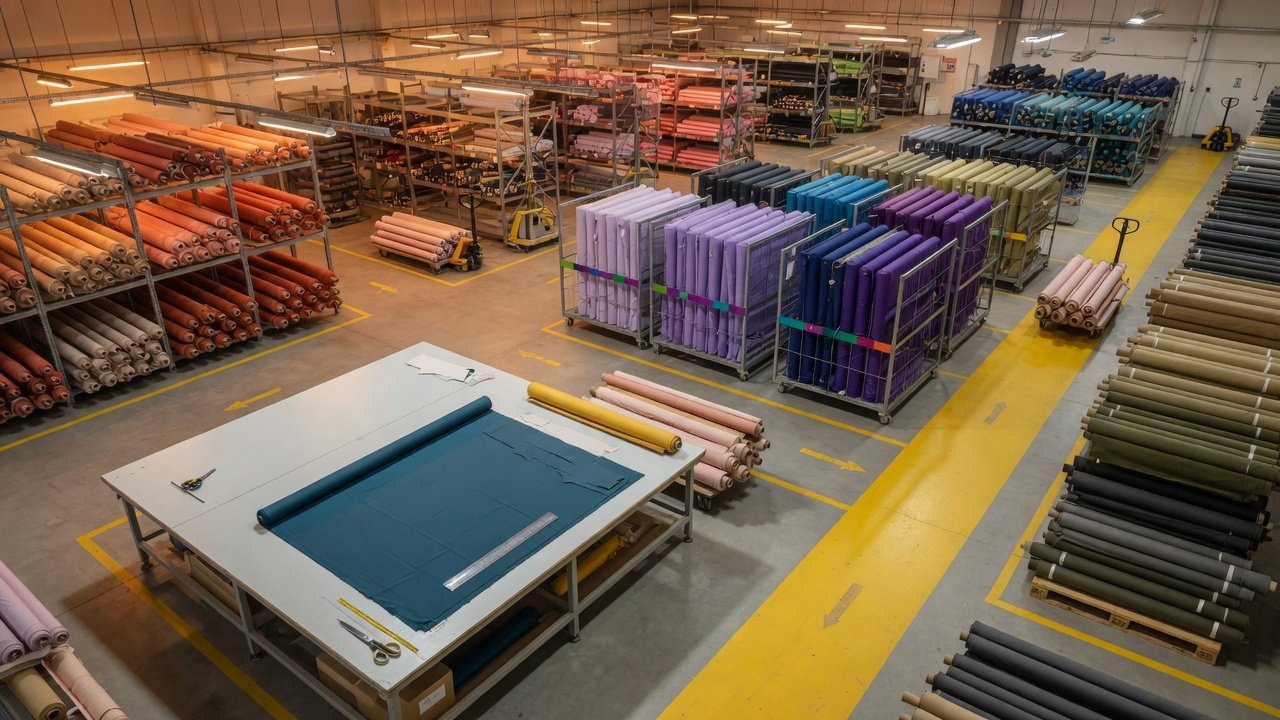
Fabric loss is one of the most expensive silent leaks in a garment factory. It does not always look like waste on the floor. Sometimes it looks like “normal” excess cutting, unreturned rolls, poor marker follow-up or WIP sitting in the wrong section.
Because fabric is purchased upfront, every point of utilization loss hits cash before it hits profit.
Why factories under-measure fabric loss
- Cutting records focus on issued vs cut, not root cause.
- Marker changes are not tracked by style.
- Leftover rolls sit without clear ownership.
- Production rushes override utilization discipline.
- Finance sees fabric purchase; production sees output.
Without a daily connection between fabric movement and order progress, utilization becomes a month-end argument.
The numbers worth tracking
Marker efficiency and cut plan adherence
Did the factory cut what was planned, with the approved marker, on schedule?
Roll issuance vs return
Which rolls are on the floor too long? Which styles have unmatched returns?
WIP age by section
Old WIP often means fabric is trapped in semi-finished form.
Rework fabric consumption
Defects have a fabric cost too, especially when panels are replaced.
Inventory days
High inventory days usually mean material is waiting on flow problems, not demand.
Practical controls that work
- One owner for fabric follow-up — not “everyone.”
- Daily cut plan review with merchandising and production.
- Roll tagging with style, shade and issue time.
- Escalation when WIP crosses age limits.
- Weekly marker efficiency review by style family.
None of this requires advanced technology to begin. It requires rhythm.
How this connects to cash cycle
When utilization improves:
- Less unplanned fabric buying.
- Faster order closing.
- Lower WIP storage pressure.
- Better predictability for buyer commitments.
Large factories often have a meaningful working-capital unlock when fabric and WIP discipline improve together — sometimes in the range of 10–15 Cr opportunity in bigger operations, depending on scale and current leakage.
Start with one product category
Pick the style group with the highest fabric cost or the worst rework history.
Track for two weeks:
- Planned marker vs actual.
- Roll days on floor.
- WIP age at cutting, sewing and finishing.
- Rework panels replaced.
Fix the top two causes before rolling out factory-wide.
What not to do
- Do not treat fabric loss as only a cutting supervisor issue.
- Do not change markers without recording the reason.
- Do not push output while rolls are untracked.
- Do not wait for month-end fabric reconciliation to act.
Navvi action: Navvi factory transformation starts with assessment, loss mapping and daily control design. SewTrak can then keep order progress, WIP and performance visible while the fabric rhythm is sustained.