
Productivity and industrial engineering
Why Garment Factory Productivity Stalls
Productivity rarely depends on operator speed alone. It depends on how well the complete production system supports the operator.
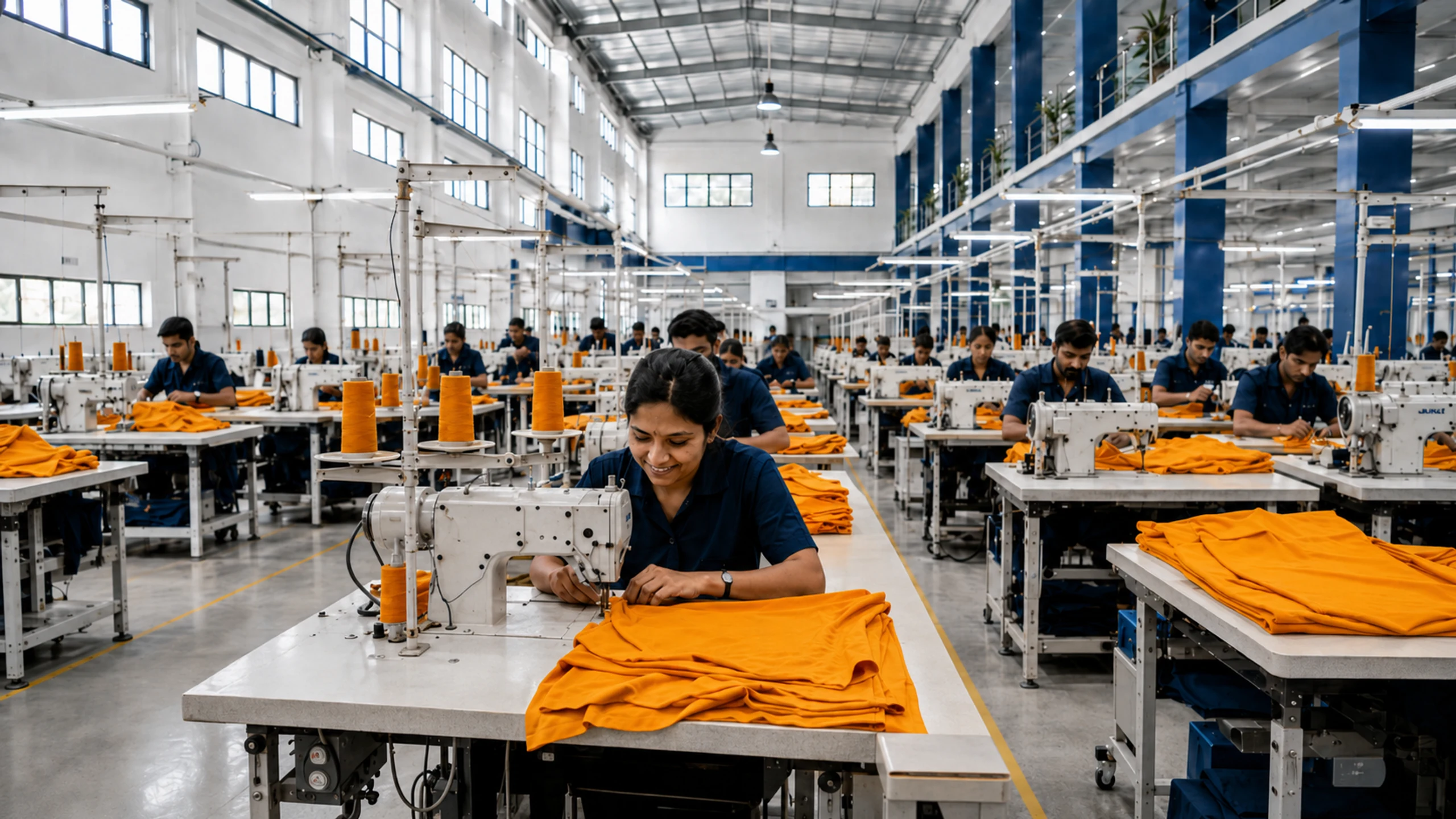
Productivity is the output of a system
It is easy to treat low productivity as an operator problem because the operator is the visible point of production. The actual causes may begin much earlier in method definition, target preparation, line loading, skill allocation or material readiness.
Improvement starts by measuring the full set of conditions that allow productive minutes to become good output.
Check the technical baseline
A target cannot guide a line when the operation sequence, SAM or expected conditions are unclear.
- Is the work content approved and consistently understood?
- Does the target reflect the operation mix and available minutes?
- Are methods and quality expectations stable?
- Can supervisors explain the basis of the target?
Balance flow, not only manpower
Adding or moving operators can hide a bottleneck without resolving it. Good balancing considers operation sequence, skill, machine availability, feeding, WIP and the point at which delay becomes visible.
The line should be reviewed as a flow of work, not a collection of individual efficiencies.
Measure lost minutes with usable reasons
A general downtime number does not tell management what to change. Loss reasons must be specific enough to assign ownership and consistent enough to compare over time.
The review should focus on recurrence and closure rather than collecting more categories than the factory can act upon.
Make the daily review operational
An effective review answers four questions before the next shift begins.
- Where did plan and actual separate?
- Which cause created the largest controllable loss?
- Who owns the correction and by when?
- What evidence will confirm closure?
Sustainability comes from management discipline
A pilot line can improve through close attention. Factory-wide performance requires the routines, skills and data to continue after the initial project team steps back.
Navvi therefore treats productivity improvement as a management-system implementation, supported by industrial engineering and factory-focused technology.